
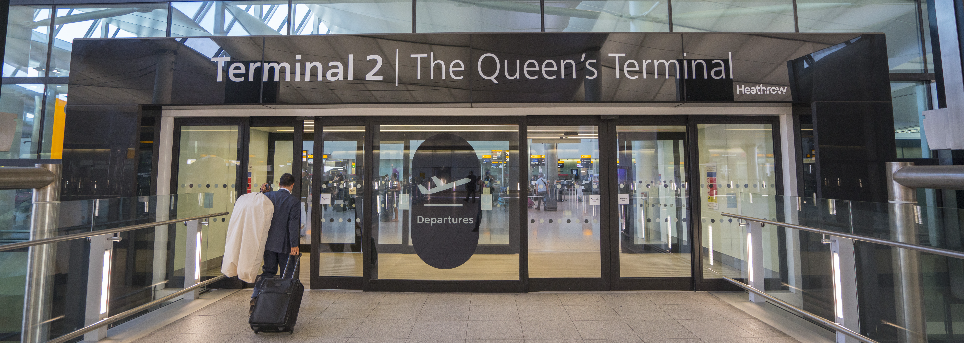
The world-renowned Terminal 2 at Heathrow, The Queen’s Terminal, was designed around a highly efficient, shared check-in model to accommodate the numerous Star Alliance and independent airlines it serves. However, the global disruption to travel in 2020 caused by the pandemic led to a necessary shift back to conventional, dedicated check-in desks for each airline. As passenger numbers began their steep recovery, this legacy model proved unsustainable, creating significant operational hurdles and challenging growth.
The challenge
With passenger demand rapidly returning, Heathrow faced a critical capacity constraint within the Terminal 2 check-in hall. The dedicated-desk model, while functional during periods of low traffic, was unprepared for the resurgent volume of travellers and future growth.
This created a cascade of challenges impacting the entire departure experience:
- Congestion and Queues: The dedicated use of space led to longer queues that frequently spilled into circulation areas, impeding passenger flow and creating a disoriented environment for travellers entering the terminal.
- Passenger Processing Times: Manual surveys revealed that transaction times at check-in desks had increased, driven by temporary documentation requirements, varied airline processes, and the need for passengers to navigate an increasingly complex system.
- Utilisation of Technology: Despite the availability of self-service kiosks (CUSS) and bag drops (SSBDs), adoption rates by airlines needed improving. In addition, passengers often struggled with processes like attaching bag tags or preferred the perceived certainty of human interaction, negating the potential efficiency gains of automation.
- Resilience and Scalability: The rigid, airline-specific desk allocation lacked the flexibility to adapt to daily operational peaks and troughs, offering no scalable solution to accommodate future growth in passenger numbers or airline partners.
- Passenger Satisfaction: The strain on the system was reflected in customer feedback, with passenger satisfaction scores for the T2 check-in experience seeing a decline compared to pre-pandemic levels and other terminals.
Heathrow needed a strategic solution to not only solve the immediate capacity crunch but also build a resilient, efficient and passenger-friendly check-in ecosystem for the future. Heathrow enlisted AiQ Consulting, specialists in maximising airport capacity and solving complex operational challenges.
The solution
Heathrow initiated the T2 Check-in Optimisation Programme (COP24), a comprehensive, multi-phased project designed to re-engineer the check-in process through data, collaboration and strategic innovation. AiQ were invited to project manage the programme. The approach was rooted in a deep understanding of the current operational reality.
- Data-Driven Diagnosis: The project began with extensive on-the-ground analysis. AiQ conducted detailed transaction time and operational surveys, meticulously measuring every step of the check-in journey. AiQ in collaboration with the Heathrow Business Change team studied passenger flows, kiosk usage rates, bag drop transaction times and staff-passenger interactions to identify specific bottlenecks and pain points across all airlines. This evidence-based approach provided an objective foundation for all subsequent decisions.
- Collaborative Stakeholder Engagement: Recognising that success depended on a unified approach, a series of workshops and bilateral meetings with its airline partners and their ground handling agents were conducted. This collaborative forum allowed stakeholders to share challenges, align objectives and co-create a solution that balanced the needs of different carriers with the overarching goal of terminal efficiency.
- A Strategic Return to a Shared Model: The programme’s core recommendation was a phased return to a more flexible, shared-resource model. The proposed solution moved away from dedicated desks toward a Universal Bag Drop (UBD) Check-in system, also known as Multi-Airline Check-in. In this model, airlines are grouped into zones, allowing them to share a common set of check-in desks and self-service infrastructure. This dynamic allocation enables resources to be deployed where demand is highest, dramatically improving utilisation. Star Alliance subsequently adopted and further developed this approach.
- Driving Automation and Improving Usability: To tackle technology adoption, AiQ worked with Heathrow and Amadeus to project manage airline adoption of self-service bag drop technology. In addition, there was a renewed focus on the passenger experience at self-service points. Key initiatives proposed included deploying trained floorwalkers to guide passengers, introducing clear instructions to demystify processes like bag-tagging, and promoting “fast routes” for passengers who had already checked in online.
The Benefits
The T2 Check-in Optimisation Programme has laid the groundwork for a transformative improvement in terminal operations, delivering significant benefits for Heathrow, Star Alliance, airline partners and millions of passengers.
- Enhanced Operational Efficiency
- Improved Passenger Experience
- Increased Resilience and Scalability
- Strengthened Collaborative Partnerships
- Enhanced Operational Efficiency: Star Alliance’s ongoing shift to a Universal Bag Drop (UBD) model unlocks significant desk capacity. By allowing resources to be shared, the terminal will handle higher passenger volumes with its existing footprint, reducing the need for costly infrastructure changes and ensuring a far more efficient use of assets.
- Improved Passenger Experience: A direct result of increased efficiency is a smoother, faster journey for travellers. The optimised model is designed to reduce queue lengths and cut waiting times. Clearer guidance and a more intuitive layout decrease stress and confusion, restoring the world-class experience Terminal 2 is known for.
- Increased Resilience and Scalability: The flexible, UBD approach provides the operational agility needed to manage daily peaks in demand effectively. More importantly, it creates a scalable framework that can accommodate future growth in passenger traffic.
- Strengthened Collaborative Partnerships: The programme’s inclusive and data-led methodology fostered a stronger, more collaborative relationship between Heathrow, Star Alliance and its airline community. By working together to solve a shared challenge, all parties have contributed to a more cohesive and efficient operational environment that benefits everyone.
Our operational and analytical experts are dedicated to analysing, modelling and optimising every aspect of an airport. Specialising in airport capacity, we are trusted to realise capacity and solve complex operational challenges. For more information about how we can assist you with any of your challenges, contact us today.