

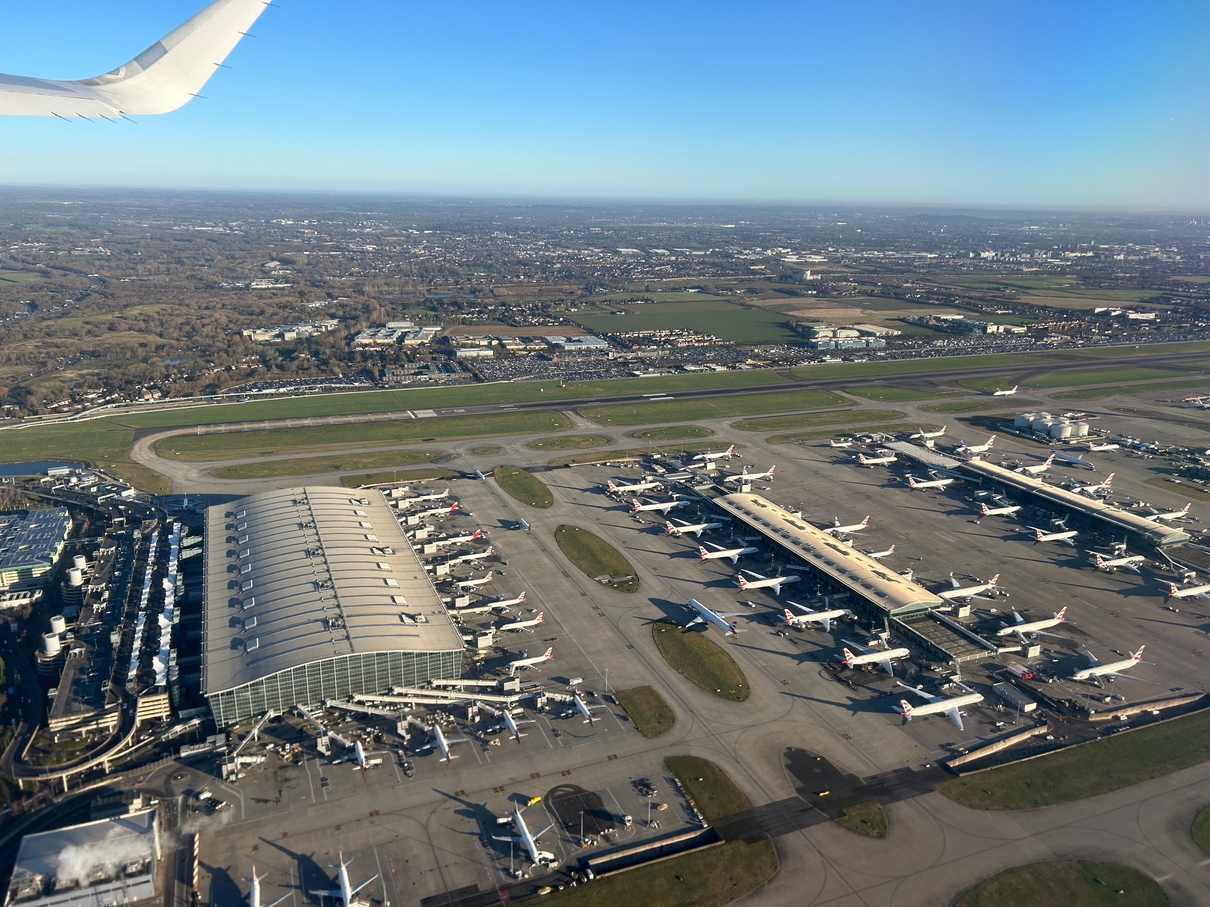
Airport infrastructure investment is rarely a small decision.
Whether the proposal involves a terminal expansion, additional stands, a new baggage system, expanded processing facilities or changes to the airside environment, major projects require significant capital, time and long-term commitment.
But before committing to new infrastructure, airports should first ask a more fundamental question:
Do we actually need to build more?
In many cases, the answer may be yes. But understanding exactly where the problem lies, whether it can be addressed through operational improvements, better use of existing assets or a different approach, can make the difference between an investment that delivers long-term value and one that simply adds capacity without solving the underlying issue.
Here are five questions every airport should consider before moving ahead.
- Is there really a capacity problem?
Capacity constraints can appear obvious. Queues at security, busy gates, congested baggage areas or delays on the apron can all suggest that additional infrastructure is needed.
But visible pressure does not necessarily mean the airport has a fundamental capacity shortfall.
The first step should be to understand where, when and why capacity is constrained.
Is the issue occurring consistently throughout the day, or only during short peak periods? Is one part of the operation limiting the performance of the wider system? Are facilities genuinely operating at their maximum, or is available capacity being used inefficiently?
A detailed analysis of demand, capacity and utilisation can help distinguish between a genuine infrastructure requirement and a problem that may have another solution.
- Can operations be optimised first?
Before building new infrastructure, airports should consider whether they are making the best possible use of what they already have.
Operational improvements can sometimes unlock additional capacity without requiring major construction.
This might include better stand allocation, dynamic stand management, improved aircraft turnaround processes, changes to passenger flows, more effective use of existing terminal facilities or closer coordination between airport stakeholders.
Technologies and approaches such as Airport Collaborative Decision Making (A-CDM) can also help improve coordination and predictability across the airport ecosystem.
The objective isn’t to avoid infrastructure investment at all costs. It is to make sure that new infrastructure is being considered after opportunities to optimise existing operations have been properly assessed.
- What’s actually driving the bottleneck?
A bottleneck in one area of an airport can often be caused by something happening somewhere else.
For example, a terminal may appear to lack sufficient processing capacity when the real constraint is the way passengers are arriving at the facility. Similarly, additional aircraft stands may not solve delays if the underlying issue is turnaround performance, gate allocation or apron operations.
Understanding the root cause is therefore critical.
Airports should look at the interaction between passengers, aircraft, baggage, stands, terminal facilities, airside operations and surrounding infrastructure rather than assessing each component in isolation.
A systems-based approach can reveal where the real constraint sits — and whether solving it requires new infrastructure at all.
- Are the passenger forecasts robust?
Infrastructure decisions are often made with a long-term horizon, which makes demand forecasting particularly important.
A project designed around an overly optimistic growth scenario can leave an airport with expensive infrastructure that is underutilised. Conversely, underestimating future demand can result in capacity constraints and the need for further investment sooner than expected.
Forecasts should therefore be tested against multiple scenarios, rather than relying on a single growth trajectory.
What happens if passenger growth is slower than expected? What if demand accelerates? How might airline behaviour, aircraft technology, economic conditions or changing passenger patterns affect the forecast?
Robust forecasting doesn’t eliminate uncertainty. It allows airports to understand it, and make investment decisions that remain resilient across a range of possible futures.
- What are the alternatives?
Once the problem and its underlying causes are understood, the next question is perhaps the most important:
What are our options?
A new terminal, additional stands or expanded processing facility may be the right answer. But it should be compared against other potential approaches.
Could the existing infrastructure be reconfigured? Could operational changes unlock additional capacity? Could technology improve throughput? Could demand be managed differently? Could investment be phased so that capacity is added as it is actually needed?
In some cases, a combination of smaller operational and infrastructure improvements may deliver a better outcome than one major capital project.
The best solution is not necessarily the biggest one. It is the one that solves the right problem, at the right time, in the right way.
Better questions lead to better investment decisions
Airport infrastructure will continue to play an important role as passenger demand evolves and airports adapt to changing operational requirements.
But successful infrastructure planning starts long before the first design is drawn up.
By challenging assumptions, understanding the real source of constraints, testing forecasts and considering operational alternatives, airports can make more informed decisions about where capital investment will have the greatest impact.
Sometimes the answer will be to build. Sometimes it will be to optimise. And sometimes, the smartest approach will be to do both — but in the right order.
If you’re considering a major airport infrastructure project, starting with the right questions can be just as important as finding the right answers.
At AiQ Consulting, we help airports understand capacity, demand and operational constraints so they can make evidence-based decisions about future infrastructure and investment. Please do get in touch with us if you’d like to explore any of these areas further.